
When to Rent Forklift Equipment for Your Site

A production line waiting on pallets, a full loading bay, or an unexpected forklift breakdown can turn a normal shift into a costly delay within hours. Knowing when to rent forklift equipment rather than buying, repairing, or stretching your existing fleet helps keep goods moving without making the wrong long-term commitment.
For warehouse, manufacturing, construction, and logistics operations, rental is not simply a temporary substitute. It is a practical way to protect uptime, cover demand, and control capital expenditure when equipment requirements change.
Rent a forklift when downtime cannot wait
The clearest reason to rent is when an owned forklift is unavailable and the work cannot stop. A breakdown may need a straightforward repair, but waiting for parts, battery work, or a major component replacement can leave an operation short of capacity for days.
Hiring a suitable replacement lets your team continue receiving stock, replenishing racking, loading lorries, or feeding production while repairs are completed properly. This avoids forcing operators to overload another machine or use equipment that is not suited to the task. Both decisions create further risk and often lead to more downtime.
A rental forklift is particularly valuable when you have only one or two machines. In a larger fleet, another unit may cover the gap for a short time. In a smaller warehouse, one disabled forklift can affect every part of the shift.
The key is to act before the disruption spreads. If a machine is losing lifting power, repeatedly showing warning indicators, suffering battery issues, or requiring frequent call-outs, arranging rental cover while it is assessed is usually safer than waiting for a complete failure.
When to rent forklift capacity for peak demand
Seasonal peaks, contract wins, stocktake periods, and high-volume inbound deliveries can make a normally adequate fleet feel undersized. Buying another forklift for a few weeks or months of heavy work may not make financial sense, especially if demand will return to normal afterwards.
Rental gives you extra capacity for the period that matters. A counterbalance forklift may be required to unload containers and handle outdoor yard work, while a reach lorry may be the better choice for additional pallet movements in narrow warehouse aisles. The right answer depends on the load, lifting height, aisle width, floor condition, and operating environment.
This is where a short site assessment is worthwhile. An apparently simple requirement, such as moving more pallets per day, may call for different equipment rather than simply another forklift of the same type. For example, a machine with insufficient lift height can slow down put-away work, while the wrong tyre type may be unsuitable for wet or uneven external surfaces.
Renting also allows managers to test whether peak demand has become a permanent change. If the additional unit remains consistently busy after several months, purchasing may then be justified. Until that point, rental keeps the decision flexible.
Short projects rarely justify a purchase
A fixed-duration project is one of the strongest cases for renting. Construction materials need moving during a site phase. A factory may be relocating machinery. A warehouse may be changing racking layouts, expanding storage, or clearing a large incoming shipment.
In these situations, buying equipment can tie up cash in a machine that will sit idle once the project ends. There are also ongoing obligations: servicing, inspections, repairs, battery care, storage, insurance, and eventual resale.
A rental arrangement provides equipment for the actual working period. It can be delivered to site, used for the required task, and collected when the work is complete. This makes project costing more accurate because the equipment cost is connected directly to the job rather than spread across an uncertain future.
For businesses taking on a new contract, rental can also reduce risk before committing to a larger fleet. It gives operations teams time to understand real handling volumes, shift patterns, and equipment wear before deciding on a purchase.
Rent while you wait for a replacement forklift
Replacing an ageing forklift is rarely as quick as selecting a machine and putting it to work the next day. Specification, availability, delivery, pre-delivery checks, and operator familiarisation all take time. If the existing unit has reached the point where repair costs are no longer sensible, rental can bridge the gap.
This approach prevents rushed buying decisions. Managers can select a replacement based on actual requirements rather than choosing whatever is immediately available because operations are under pressure.
It is also useful where a forklift has been written off after an accident or is awaiting an insurance decision. Rental cover keeps the operation running while the commercial and repair position is resolved.
Use rental to avoid overcommitting capital
Buying is often the right decision for equipment used daily over many years. However, ownership is not automatically the lowest-cost option. The purchase price is only one part of the cost. Maintenance, emergency repairs, tyres, batteries, downtime, inspections, and depreciation all need to be considered.
Rental can be a sensible choice when cash flow needs to remain available for stock, labour, premises, or production investment. A predictable rental cost is easier to plan around than a large upfront purchase followed by uncertain repair bills.
This does not mean rental is always cheaper. For a forklift working continuously in a stable operation, a purchased or long-term contract machine may offer better value over time. The practical question is whether your work is stable enough, and your utilisation high enough, to support ownership.
Ask three direct questions: How many hours will the forklift genuinely work each week? Is this demand likely to continue for at least several years? Can your business manage servicing and unexpected repair costs without affecting operations? If the answers are uncertain, rental offers useful flexibility.
Choose the rental period around the real requirement
Daily or weekly rental can suit emergency cover, shutdown work, stock clearance, or a brief surge in deliveries. Monthly rental is often more practical for longer projects, seasonal requirements, or while awaiting a new machine. Longer contract rental may suit operations that need dependable equipment but prefer predictable monthly costs and service support.
The period should match the operational need, not an arbitrary budget target. Renting for too short a term can create repeated extension costs and uncertainty. Renting for too long leaves you paying for equipment that is no longer being used.
Be clear about expected operating hours, number of shifts, whether the machine will work indoors or outdoors, and whether operators need a reach lorry, pallet stacker, or counterbalance forklift. These details help the supplier provide equipment that can perform safely and efficiently from the first day.
Check more than the rental rate
The lowest quoted rate is not always the lowest operational cost. A forklift that arrives late, lacks the correct attachment, has a weak battery, or receives slow repair support can cost more in lost handling time than any saving on hire charges.
Before confirming a rental, clarify the machine capacity, lift height, fuel or battery arrangement, tyre condition, delivery timing, service response process, and responsibility for routine checks. Ensure the forklift is suitable for your racking, loads, ramps, dock areas, and available charging facilities.
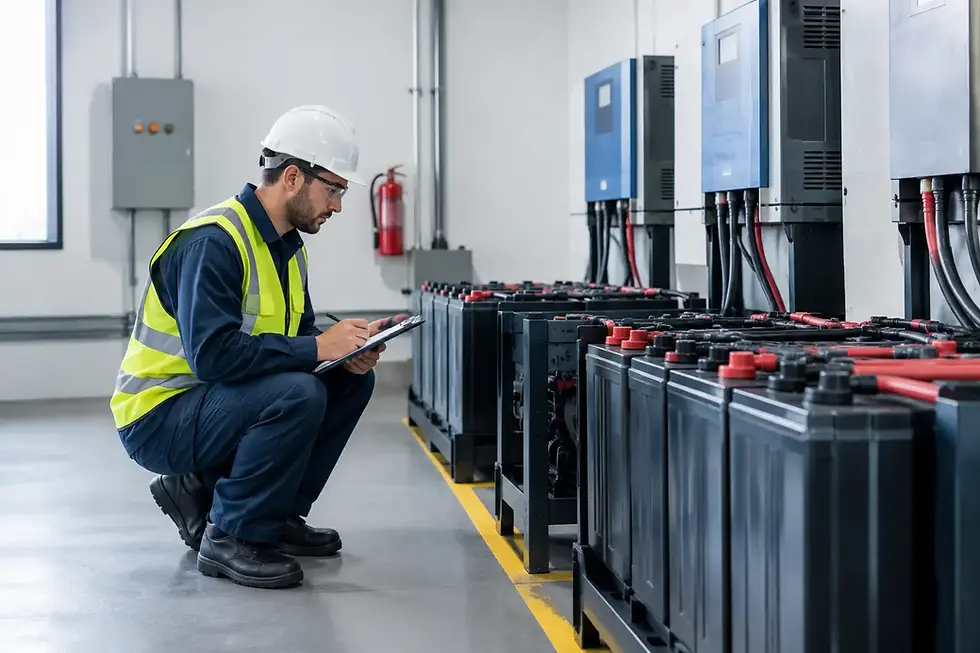
Battery condition deserves particular attention for electric forklifts and reach lorries. A machine may be technically suitable, but an unsuitable battery arrangement can limit running time during a busy shift. Where multi-shift work is planned, discuss charging time, spare battery requirements, and battery maintenance before the equipment arrives.
For Johor Bahru operations, fast local support can be as valuable as the forklift itself. TTS Machinery provides rental equipment alongside repair, maintenance, battery, and parts support, reducing the number of suppliers your team needs to coordinate when equipment availability is under pressure.
Rental is a decision about continuity
The best time to rent is before a material-handling problem becomes a wider operational failure. That may be the day a forklift breaks down, but it can also be when forecasts show a demand spike, a contract is still uncertain, or an ageing machine starts taking too much workshop time.
Treat forklift rental as planned capacity support, not a last-minute expense. With the right machine, clear rental terms, and responsive technical backup, your team can keep pallets moving while you make the longer-term decision with proper information.


Comments