

Emergency Repair Case Study: Restoring Uptime

A forklift stopping in the middle of a loading cycle is not a minor maintenance issue. It can hold up incoming stock, delay outbound lorries, create congestion at the loading bay and leave operators waiting for a decision. This emergency repair case study uses a representative warehouse scenario to show how a structured response can restore safe material movement quickly - and why diagnosis, parts access and contingency planning matter as much as the repair itself.
The breakdown: a reach lorry fails at peak movement
The site was operating a busy warehouse shift with a reach lorry assigned to high-rack put-away and replenishment. The machine began losing lift function intermittently before stopping with the forks raised just above floor level. The operator isolated the lorry, reported the fault and moved clear of the area.
The immediate problem was not simply one unavailable machine. The remaining lorries were already allocated to receiving and despatch work. Pallets waiting to be put away began to build up, while picking locations risked running short of stock. For a warehouse manager, the priority was clear: make the area safe, confirm the fault and return capacity before the backlog affected customer orders.
An emergency repair response should begin with accurate information. Before attending site, the service team needs the machine make and model, fault symptoms, any warning codes, battery condition, location within the facility and confirmation of whether the lorry can be moved safely. This helps the technician arrive with the most relevant tools, test equipment and likely service parts.
Emergency repair case study: diagnosis before replacement
On arrival, the technician first checked the basics that can produce similar symptoms: battery charge state, battery connector condition, emergency stop circuit, fuses, wiring connections and visible hydraulic leaks. Replacing components before testing may appear quick, but it can add cost and extend downtime if the root cause is elsewhere.
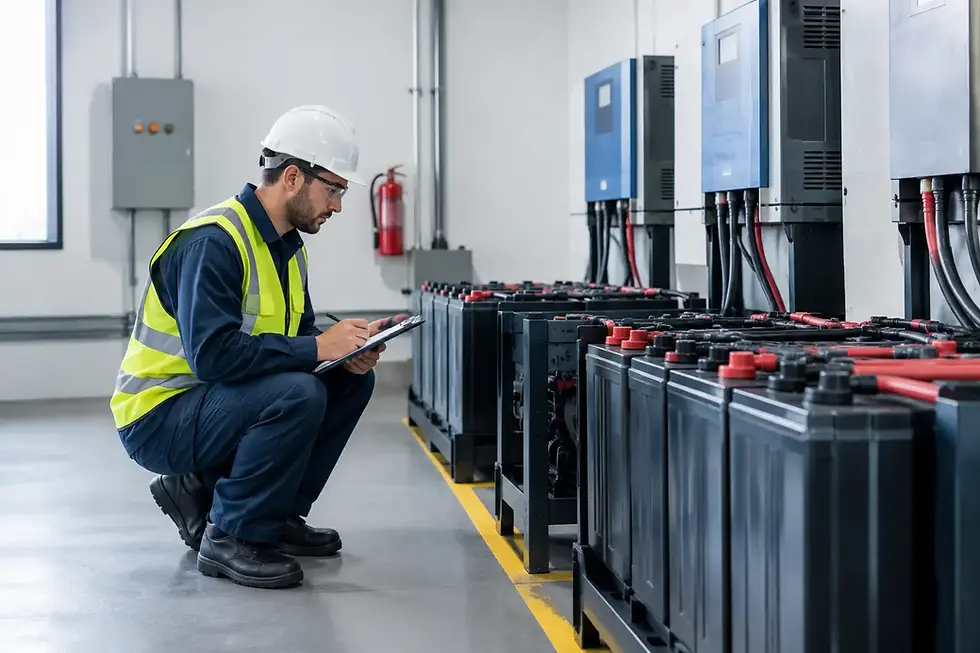
In this case, the battery had sufficient charge, but heat damage and a loose connection were found at a high-current cable terminal. The poor connection had caused voltage drop under load, affecting the lorry's hydraulic control system. A further inspection found that the terminal hardware and a short length of cable required replacement. The technician also checked adjacent cables for heat damage and confirmed that the battery connector was engaging correctly.
This is where technical judgement matters. A warning code can point towards a controller, motor or hydraulic fault, yet low voltage or resistance in a damaged connection can create misleading symptoms. The correct repair is not always the most expensive component. It is the repair that resolves the cause, can be verified under operating conditions and does not compromise safety.
After fitting the replacement parts, the technician carried out functional checks on lifting, lowering, reach operation, steering, travel direction and braking. The lorry was then tested with a suitable load before being handed back to the site team. The repair was recorded along with the condition of the affected parts and recommendations for follow-up inspection.
Keeping the operation moving during the repair
Even a well-managed onsite repair takes time. The warehouse cannot assume that a fault will be resolved in the first hour, especially when a major component, specialist part or offsite work is required. That is why an emergency plan needs an operational answer as well as a technical one.
For this site, work was temporarily reorganised. The available counterbalance forklift handled incoming pallets at ground level while staff prioritised urgent replenishment using the remaining reach capability. The warehouse manager delayed non-essential put-away activity and focused on order-critical locations.
Where the repair cannot be completed promptly, a short-term rental forklift or reach lorry can protect the shift. The right choice depends on aisle width, lift height, load weight, tyre requirements and whether the site has compatible charging facilities. Sending a machine that does not suit the racking layout or battery arrangement only creates another delay.
TTS Machinery can support this decision with emergency repair, rental and parts coordination through one service partner. For operations teams, this reduces the time spent calling separate repairers, equipment suppliers and transport providers while a backlog grows.
What made the response effective
The repair itself was straightforward once the fault had been identified. The value came from the order of work. The operator stopped using the lorry when the fault appeared, avoiding a greater risk of electrical damage or an incident. The site provided clear fault information, enabling a targeted attendance. The technician tested the system rather than guessing, and the warehouse adjusted its workflow while the machine was unavailable.
A fast response is valuable, but it is not the only measure of a good emergency service. A technician who arrives quickly but lacks the right test process, parts support or equipment knowledge may still leave the site with unresolved downtime. Equally, a repair may be technically correct but commercially disruptive if there is no plan for temporary capacity.
At a practical level, the strongest emergency response combines four things: safe isolation, accurate diagnosis, access to suitable parts and a fallback machine when the repair scope is uncertain. The balance changes by site. A small factory with one forklift may need a replacement unit immediately. A larger distribution centre may be able to redistribute work for several hours, but require a specialist reach lorry if the fault continues into the next shift.
Preventing the same failure from returning
Emergency call-outs often expose maintenance gaps that were not obvious during normal operation. In this example, the damaged cable terminal did not occur without warning. Earlier signs may have included intermittent power loss, warm connectors, reduced lifting performance or occasional fault messages under heavier loads.
Following the repair, the site should inspect comparable high-current connections across its fleet and include battery terminals, cable condition and connector engagement in planned service checks. Battery care is especially relevant for electric forklifts and reach lorries. Poor charging practice, damaged connectors, low electrolyte levels on suitable battery types, or cables pulled during battery changes can all contribute to avoidable faults.
Planned quarterly or annual servicing does not guarantee that a truck will never fail. It does, however, improve the chance of finding wear, loose connections, hydraulic leaks, brake issues and battery concerns before they become a breakdown during peak work. It also gives service technicians a record of previous repairs, recurring faults and component condition, which can speed up future diagnosis.
Questions to ask after an emergency forklift repair
Once the lorry is back in service, the operations team should look beyond the immediate restart. Was the fault linked to wear, operator impact, charging practice or an overdue inspection? Is the same part likely to affect other machines? Did the site have enough spare capacity to protect customer commitments? These questions turn a breakdown into a useful operational review rather than a repeated cost.
It is also sensible to review response arrangements before the next emergency. Keep an up-to-date list of each machine's make, model, serial number, battery type, lift height and common attachments. Ensure supervisors know how to report warning codes and symptoms clearly. Confirm who can approve repairs, rental equipment and parts outside normal office hours. Small preparation steps can remove hours of avoidable delay.
For forklift-dependent businesses in Johor Bahru, downtime is rarely convenient and often expensive. The practical aim is not merely to get a machine running again. It is to restore safe handling capacity, protect the day's commitments and reduce the likelihood that the same fault will stop the operation twice.


Comments