

When Forklift Rental for Factories Pays Off

A stopped forklift can quickly become a stopped production line. Pallets wait at receiving, finished goods cannot reach despatch, and operators are left working around a problem that may have started with a flat battery, tyre damage or a hydraulic fault. Forklift rental for factories gives operations teams a practical way to protect output when owned equipment is unavailable, insufficient or no longer suited to the workload.
For factory managers, the question is rarely whether a forklift is needed. The real question is whether buying another unit is the right response to a short-term or changing requirement. Rental can provide the capacity needed now, without tying up capital in equipment that may sit idle after a project, seasonal peak or maintenance shutdown has passed.
When forklift rental for factories makes commercial sense
Rental is most useful when the need is clear but the duration is uncertain. A factory may need additional lifting capacity while preparing a large order, moving machinery, reorganising storage areas or handling a temporary increase in inbound materials. In these cases, hiring a forklift avoids the delay and financial commitment involved in purchasing a unit for work that may only last weeks or months.
Breakdowns are another common reason. Even well-maintained forklifts can be taken out of service by mechanical wear, impact damage or battery issues. When a key unit is down, waiting for a repair can create costly bottlenecks. A replacement rental forklift keeps materials moving while repairs are completed properly, rather than forcing teams to overload the remaining fleet or rush a repair decision.
Planned servicing also deserves attention. Factories that depend on several machines often schedule major maintenance outside peak periods, but not every unit can be serviced without affecting capacity. A short-term rental can cover the gap, allowing preventative work to be carried out on time. This reduces the risk of a more serious failure occurring during a busy production run.
Rental may also be the better choice when a factory is testing a new handling arrangement. For example, a reach truck may improve access in a higher racking layout, while an electric forklift may be more suitable for indoor production areas. Hiring the equipment first allows the team to assess turning space, lift height, battery endurance and operator comfort in real working conditions.
Start with the job, not the forklift model
The cheapest available forklift is not always the lowest-cost option. An undersized unit may struggle with loads or work too slowly. A larger machine may be difficult to manoeuvre in narrow aisles, consume more fuel or be unnecessary for the task. The right rental starts with a clear picture of the work to be done.
Consider the typical load weight, including pallets, stillages and attachments. Then check the required lift height and the load centre, as lifting capacity reduces at greater heights or when loads sit further forward on the forks. A forklift that can lift two tonnes at ground level may not be rated for the same load at the top rack position.
The working environment matters just as much. Electric forklifts are often appropriate for indoor factory and warehouse operations because they produce no exhaust emissions at the point of use and can operate smoothly in confined areas. Diesel units may be better suited to heavier outdoor work, loading yards or uneven surfaces. The correct choice depends on ventilation, travel distances, floor condition and shift pattern.
Reach trucks are often a strong option for high-rack warehouse storage, but they are not a direct replacement for a counterbalance forklift used to load lorries at a dock. A reliable supplier should ask where the machine will operate, what it will lift and how often it will run before recommending a unit.
What to confirm before arranging a rental
A rental agreement should be clear enough that the factory knows exactly what is arriving on site and what support is available if conditions change. Before delivery, confirm these operational points:
Required capacity, lift height, mast type and fork length.
Power source, battery condition and charging requirements for electric units.
Indoor, outdoor or mixed-use conditions, including gradients and floor surfaces.
Rental period, expected operating hours and whether the requirement may be extended.
Delivery access, unloading arrangements and the space available for the machine.
Breakdown support, servicing responsibility and the process for reporting faults.
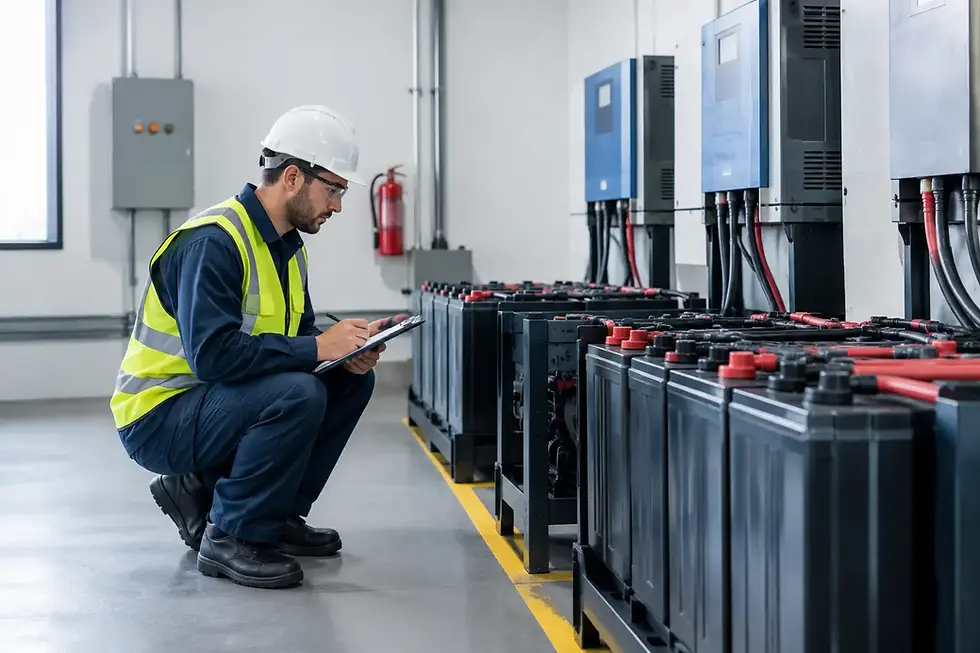
Battery planning is particularly important for electric forklift rental. A machine may be suitable in principle but still fail to support the operation if charging time has not been considered. One-shift work may be managed with a correctly maintained battery and overnight charging. Multi-shift operations may need battery changes, charging discipline or a different equipment arrangement. This should be discussed before the forklift arrives, not after it loses power halfway through a shift.
Factories should also make sure operators are authorised and familiar with the equipment type. Controls, visibility, turning characteristics and mast operation can differ between models. A short site briefing helps operators work safely and reduces avoidable damage to racking, doors, stock and the rental machine itself.
Keep the rental unit productive from day one
A rental forklift works best when it is treated as part of the existing fleet, not as a temporary machine with no ownership. Assign daily pre-use checks, record operating hours where relevant and give the unit a defined parking and charging area. Small issues identified early, such as a damaged wheel, leaking hose or weak battery connection, are easier to resolve before they become downtime.
Good housekeeping also protects productivity. Clear travel routes, marked pedestrian areas and sensible pallet storage reduce the chance of impact damage and unnecessary travelling time. If the forklift will be used to support a new production flow, observe the first few days closely. The original equipment choice may be right, but the location of loading points or the timing of material replenishment may need adjustment.
Communication with the rental provider should be direct. Report faults promptly and describe the symptoms clearly: whether the issue occurs when lifting, travelling, steering, charging or starting. Providing the machine model, fault code and operating conditions helps technicians prepare the right parts and tools before attending site.
For factories in Johor Bahru, local service coverage can make a meaningful difference. A supplier with practical knowledge of industrial sites, delivery access and onsite repair requirements is better placed to respond when a machine is urgently needed or an active rental requires attention.
Compare rental cost against downtime risk
The rental rate is only one part of the decision. Managers should compare it with the likely cost of delayed production, missed despatches, overtime, manual handling and disruption to other equipment. A rental unit can be cost-effective even when it is used as standby capacity, particularly where one failed forklift would affect an entire shift.
At the same time, rental is not automatically the best long-term answer. If a factory has stable, year-round demand and uses the same forklift continuously over several years, ownership or a longer contract arrangement may provide better value. The decision depends on utilisation, maintenance needs, capital availability and how quickly the operation may change.
A useful approach is to review rental use after each major period. If short hires repeatedly become extensions, the factory may have identified a permanent fleet gap. If demand falls back after a project ends, rental has done exactly what it should: provided capacity without leaving the business with underused equipment.
TTS Machinery supports factories with rental equipment, repairs, servicing, batteries and parts because forklift uptime is rarely solved by a machine alone. The most effective rental arrangement is one that matches the job, arrives ready for work and has dependable support behind it when the operation cannot afford to wait.


Comments