

Short Term Versus Contract Rental for Forklifts

A forklift standing idle can hold up goods receiving, put-away, picking and lorry loading within the same shift. That is why the choice between short term versus contract rental should not be based on the daily rate alone. The right arrangement depends on how predictable your workload is, how critical the lorry is to your operation, and how much support you need when equipment requires attention.
For warehouses, factories and construction sites, rental is often the fastest way to add capacity without tying up capital in a purchase. The more useful question is whether you need a temporary answer to an immediate problem or a planned equipment solution that supports daily operations over the long run.
Short term versus contract rental: the operational difference
Short-term rental is designed for a defined, temporary requirement. It can cover a breakdown of an owned forklift, a seasonal order increase, stock relocation, a warehouse move or a short project with an uncertain finish date. The hire period may be measured in days, weeks or a few months, depending on the job and equipment availability.
Contract rental is a longer, agreed arrangement for equipment that will be used as part of normal operations. Instead of repeatedly sourcing a forklift whenever demand rises, the business has a dedicated lorry for a fixed term, commonly with planned servicing and support included according to the agreement. This gives managers greater certainty over monthly costs and fleet availability.
Neither option is automatically better. A short hire can be the most cost-effective decision when the requirement is genuinely brief. But when a forklift is working every day, extending a short-term hire month after month can become expensive and difficult to manage. A contract arrangement may then offer better value, clearer accountability and less disruption.
When short-term forklift rental is the right choice
Short-term rental works best when flexibility matters more than a fixed monthly commitment. A distribution centre dealing with a sudden inbound shipment may need an extra reach lorry immediately. A manufacturer may need cover while its own counterbalance forklift is being repaired. A contractor may require equipment only until a particular phase of work is complete.
In these situations, a quick rental can protect output without forcing a long commitment. It also gives operations teams time to assess what they actually need. For example, a site may assume it needs another standard forklift, then find that a reach lorry is more suitable once pallet racking height, aisle width and lift capacity are reviewed.
Short-term rental is particularly practical when the end date is uncertain. If a repair is awaiting parts, a project schedule has not been confirmed or a customer order may change, committing to a long contract too early can create unnecessary cost.
However, short hire requires active planning. Availability can vary, especially for specialised lift capacities, electric reach lorries or equipment needed at short notice. The hire rate may also be higher because the rental provider must allow for flexible deployment, delivery and collection. A short-term arrangement is valuable for responsiveness, but it is not always the lowest-cost choice over an extended period.
When contract rental makes better commercial sense
Contract rental suits businesses with a steady, ongoing material handling requirement. If a forklift is required for daily loading, production feeding, racking work or dispatch, a long-term agreement turns an essential operating need into a predictable monthly cost.
This can be easier for procurement and finance teams to manage. Rather than dealing with irregular repair invoices, ad-hoc rentals and the risk of an ageing owned fleet, the business can plan around an agreed rental charge and defined service scope. Capital that would otherwise be used to purchase equipment can remain available for inventory, expansion or other operational priorities.
The strongest case for contract rental is uptime. A properly structured agreement should set out the machine specification, servicing schedule, repair support, expected response arrangements and responsibility for normal wear items. That clarity matters because an unsuitable or poorly maintained forklift costs more than its rental fee when it interrupts work.
For a Johor Bahru warehouse operating multiple shifts, a dedicated contract forklift can also simplify staffing and workflow. Operators work with familiar equipment, supervisors can plan around known capacity, and the service provider has a clearer understanding of the site’s working conditions. This often leads to faster diagnosis when an issue occurs.
Contract rental does require commitment. If your volumes fall sharply, your site closes temporarily or operational needs change, you may still be responsible for the agreed rental period. Before signing, make sure the term reflects realistic demand rather than an optimistic forecast.
Look beyond the headline rental rate
Comparing daily, weekly or monthly hire charges is necessary, but it is only one part of the decision. The real cost of forklift rental includes the effect on uptime, labour and site productivity.
A low rental rate is less attractive if the machine is not suited to the application. A forklift with insufficient capacity may not safely handle your heaviest loads. A lorry that is too large for narrow aisles can slow picking and increase the chance of rack damage. An electric forklift with a battery plan that does not match shift length may spend too much time charging when it should be moving pallets.
Ask what is included in the proposed arrangement. Delivery and collection, scheduled maintenance, breakdown attendance, replacement equipment, tyres, batteries and chargers can have a major effect on the final value. The details vary by provider and contract, so it is better to obtain an honest, clear quote than assume every service is covered.
Downtime should also be treated as a cost. If a forklift is central to dispatch, one unplanned stoppage may leave staff waiting, lorries delayed and customer orders behind schedule. A rental partner with technicians, stocked service vehicles and practical access to parts can be worth more than a marginal saving on the hire price.
Match the equipment to the job before choosing a term
The rental period should be decided alongside the machine specification. A short-term emergency replacement may need to match your existing forklift closely so work can continue with minimal adjustment. A long-term contract gives more room to select equipment that improves the operation rather than simply replacing what is already there.
Start with the load weight, lift height, pallet dimensions and attachment requirements. Then consider aisle width, floor condition, indoor or outdoor use, gradients, loading bay access and operating hours. These factors determine whether you need a diesel, LPG or electric forklift, a reach lorry, and which capacity is appropriate.
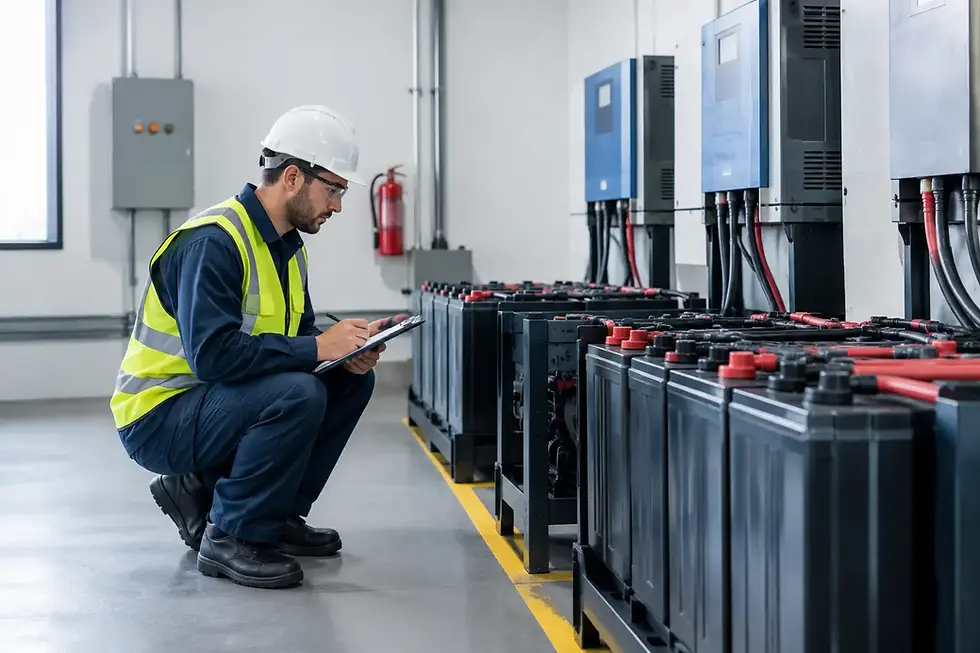
Battery performance deserves specific attention for electric equipment. A single-shift operation may work well with conventional charging during downtime. Multi-shift use may require a higher-capacity battery, a spare battery arrangement or a charging plan that avoids interrupting peak work. Battery condition affects run time, lifting performance and operating cost, so it should be part of the rental discussion from the beginning.
Questions to settle before agreeing a rental plan
Before choosing short-term or contract rental, confirm the expected period of use and whether demand is likely to rise, fall or remain stable. Establish the exact equipment needed, including capacity, mast height, power type and any attachments. It is also sensible to confirm delivery timing, site access and who will carry out daily operator checks.
For contract rental, review the service terms carefully. Understand planned maintenance frequency, breakdown reporting procedures, response expectations, excluded damage, operator responsibility and what happens if the machine becomes unavailable. A clear agreement prevents disagreement at the point when your operation is under pressure.
For short-term hire, ask how quickly additional equipment can be supplied if the job expands. The ability to add another forklift or exchange a machine for a more suitable model can be as valuable as the initial rental rate.
Choose the arrangement that protects your workflow
Short-term rental gives immediate flexibility when demand is temporary or uncertain. Contract rental gives stability when a forklift is a permanent part of the working day. The sensible choice comes from examining utilisation, equipment suitability and the cost of lost productivity, not simply selecting the shortest or cheapest quote.
If your team is repeatedly arranging temporary cover, treating breakdowns as routine or struggling to match equipment availability to workload, it may be time to review the rental approach. A practical discussion with a forklift partner can turn recurring disruption into a plan that keeps goods moving.


Comments