

Lithium Ion Versus Lead Acid for Forklifts

A forklift battery decision becomes expensive when it is made only on purchase price. In the lithium ion versus lead acid comparison, the right choice depends on how many hours your lorries work, when operators can charge, whether battery changes interrupt shifts, and how much downtime your site can absorb.
For a warehouse running one daytime shift with planned breaks, a lead acid battery may remain a sensible, cost-controlled option. For intensive multi-shift work where every available lorry matters, lithium-ion can reduce charging delays and maintenance work. The best answer is not the newest technology by default. It is the battery system that supports reliable daily operation.
Lithium Ion Versus Lead Acid: The Operational Difference
Lead acid batteries have powered electric forklifts for decades because they are proven, widely available and comparatively affordable to purchase. They use a liquid electrolyte and require disciplined charging, watering, cleaning and periodic equalisation. When cared for correctly, they can provide dependable service over many cycles.
Lithium-ion forklift batteries use cells managed by a battery management system, commonly with lithium iron phosphate chemistry in industrial applications. The management system monitors cell condition, temperature and charging behaviour. These batteries are sealed, do not need watering, and can generally accept opportunity charging during breaks without the same damage risk associated with repeated partial charging of lead acid batteries.
That difference changes the way a fleet is managed. A lead acid operation may need spare batteries, a changing area, lifting equipment and time allocated for changing batteries between shifts. Lithium-ion may allow the same forklift to stay in service with planned short charging sessions, provided the charger, electrical supply and duty cycle are properly matched.
Charging Speed and Shift Coverage
Charging is often the deciding factor for busy warehouses and production sites. A conventional lead acid battery is normally charged over several hours, followed by a cooling period before full-duty use. It performs best when it is discharged to an appropriate level and then fully charged using the correct cycle. Repeated short charges can shorten battery life if charging practices are not managed carefully.
Lithium-ion batteries can charge considerably faster, and opportunity charging is one of their main advantages. An operator may top up during meal breaks, shift handovers or planned idle periods. This can make lithium-ion particularly useful for two- or three-shift operations, loading bays with constant movement, and sites where there is no practical space for a battery changing station.
Fast charging does not mean unlimited charging. The charger must be approved for the battery, the electrical installation must support the load, and charging periods still need to be planned around the actual work pattern. A battery that is too small for the application will not be saved by frequent charging alone. Before converting a fleet, assess travel distance, lift height, load weight, operating hours and available break times.
Purchase Cost Versus Total Cost of Ownership
Lead acid has a lower initial cost in most forklift applications. This matters for smaller fleets, seasonal requirements and businesses replacing a battery on a limited capital budget. Replacement batteries and compatible charging equipment are familiar to many operators and service teams.
Lithium-ion requires a higher upfront investment. However, the purchase price is only one part of the cost. Over time, lithium-ion may reduce labour spent on watering, battery cleaning and changes. It can also reduce the need for spare batteries and battery-room equipment. If faster charging keeps a forklift available through a full shift, the value may be greater than the battery cost alone.
The calculation should include labour, lost operating time, energy use, maintenance, charger replacement, expected battery life and the cost of hiring a replacement forklift during breakdowns. For a high-use fleet, a battery that prevents one regular disruption can have a meaningful operational return. For a lightly used forklift, the premium may take much longer to justify.
Maintenance Requirements and Daily Discipline
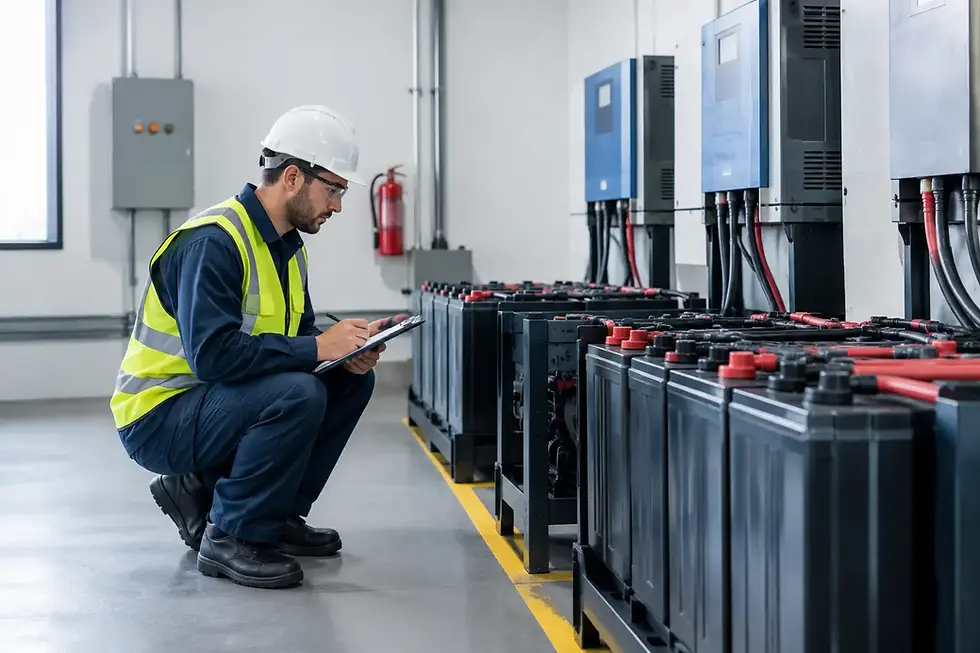
Lead acid batteries need attention. Water levels must be checked and topped up with suitable water at the correct time in the charging cycle. Terminals and connectors should be kept clean, electrolyte spills managed promptly, and the battery inspected for corrosion, damaged cables or signs of overheating. Charging areas also need suitable ventilation because lead acid batteries can release gas during charging.
None of this makes lead acid unsuitable. It simply means the site needs a clear routine and someone accountable for following it. Many premature battery failures come from missed watering, deep discharge, incorrect charging or poor housekeeping rather than from the battery itself.
Lithium-ion reduces routine battery care. There is no watering, no electrolyte handling and no equalisation charge in the usual lead acid sense. This is a practical advantage where operators are busy and maintenance teams are stretched. The trade-off is that diagnosis and repair are more specialised. The battery management system, charging connection and software protections must be understood by competent technicians.
Performance, Weight and Working Conditions
A lead acid battery loses voltage as it discharges, so forklift performance can feel less consistent towards the end of a long shift. Lithium-ion typically provides more stable voltage through a larger part of its usable charge. For operators carrying frequent loads over long distances, that consistency can support more predictable lorry behaviour.
Weight also requires careful attention. In a counterbalance forklift, the battery is part of the lorry's designed counterweight. A lithium-ion conversion must meet the forklift manufacturer's required battery weight, dimensions, voltage and connector specification. Choosing a lighter battery without proper engineering can affect stability and rated capacity. This is not an area for guesswork.
Malaysia's warm, humid operating conditions add another consideration. Both battery types need clean terminals, suitable charging areas and protection from excessive heat. Lithium-ion systems have temperature monitoring, but high ambient temperatures and poor ventilation can still affect charging and lifespan. Lead acid batteries also suffer when charging rooms are hot, dirty or poorly maintained.
Safety and Site Infrastructure
Lead acid battery safety centres on acid, gas and handling weight. A well-run battery area needs ventilation, spill control, eye-wash provisions, suitable personal protective equipment and safe procedures for changing heavy batteries. Operators should understand that exposed terminals and damaged connectors are urgent maintenance issues.
Lithium-ion avoids acid spills and charging gases, but it requires a different safety approach. Use only approved chargers, avoid damaged battery packs, follow the manufacturer's storage and charging instructions, and ensure staff know how to report warning indicators. Do not modify a lithium-ion pack, bypass protection systems or use improvised charging equipment.
Infrastructure can decide the project before the battery specification does. A site considering lithium-ion should check available electrical capacity, charger locations, cable routes and whether charging points will interfere with traffic flow. A lead acid site should assess whether its existing charging room, battery changing equipment and ventilation are still safe and adequate for current fleet use.
When Lead Acid Is the Better Fit
Lead acid remains a practical choice when the forklift works one controlled shift, has time for full overnight charging, and the business can maintain a proper watering and servicing routine. It also suits operations where initial capital cost is the main constraint or where batteries are shared across compatible trucks using an established change-out process.
It can be the more economical solution for lower-utilisation forklifts. A forklift that only runs a few hours each day may not generate enough savings from opportunity charging and reduced maintenance to offset lithium-ion's higher purchase cost.
When Lithium-Ion Is Worth Considering
Lithium-ion is strongest in high-utilisation applications. Think of a reach lorry working continuous put-away and retrieval, a counterbalance fleet serving busy loading bays, or a production line where a stopped forklift holds up material supply. Short, planned charging windows can replace long charging cycles and reduce the need to take trucks out of service.
It is also attractive where battery changing is difficult, floor space is tight, or labour spent on battery care is creating inconsistency. The value comes from better availability, not simply from fitting a different battery.
Before committing, ask for a duty-cycle assessment rather than selecting by brochure figures. Record how each forklift is used over a typical week, including shift length, load type, charging opportunities and current downtime. TTS Machinery can help assess battery condition, charging practice and equipment compatibility so the decision is based on operational facts. The right battery should make the next shift easier to run, not create another system for your team to manage.


Comments