

Electric Forklift vs Diesel for Your Operation

A forklift choice becomes expensive when it interrupts the shift. In an electric forklift vs diesel decision, the right answer is not simply the machine with the lower purchase price or rental rate. It is the unit that can complete the required work safely, consistently and with the least avoidable downtime.
For warehouse managers, factory operators and site teams, that means looking beyond the nameplate capacity. Surface conditions, operating hours, ventilation, attachment use, battery charging arrangements and maintenance support all affect whether an electric or diesel forklift is the better fit.
Electric Forklift vs Diesel: Start With the Work Site
Electric forklifts are usually the stronger option for enclosed warehouses, manufacturing floors, food-related operations and racking environments. They produce no tailpipe emissions at the point of use, operate more quietly and offer controlled handling in narrow or busy internal spaces. This improves operator comfort and helps businesses manage air quality requirements where people work nearby.
Diesel forklifts are built for tougher outdoor duties. They are well suited to loading bays, open yards, construction sites and areas with uneven ground. Their ability to refuel quickly and work through long, demanding shifts makes them practical where charging access is limited or where the machine must travel over rough surfaces.
The dividing line is not always complete. Many operations need both. A factory may use an electric reach lorry inside high-bay racking, then use a diesel forklift outside to unload lorries and move palletised materials across the yard. Matching each machine to its operating zone often gives better uptime than forcing one type to cover every task.
Indoor air quality and noise
Electric forklifts have a clear advantage indoors. Diesel exhaust, even with proper maintenance, requires suitable ventilation and may be unsuitable for enclosed areas or products sensitive to contamination. Noise is another consideration. Electric units are quieter, which can improve communication and reduce fatigue in busy warehouses.
Diesel can still be appropriate at a covered loading area with strong airflow, but this needs to be assessed realistically. If doors are frequently closed because of weather, temperature control or security, diesel emissions can quickly become an operational issue.
Ground conditions and travel distance
Diesel forklifts generally cope better with uneven, wet or loose surfaces. Pneumatic tyres, higher ground clearance and strong torque make them useful on construction projects, timber yards and external storage areas. A diesel unit is also better suited to longer travel distances between loading points.
Most electric counterbalance forklifts perform best on firm, level concrete. Outdoor electric models are available, but their suitability depends on the tyre type, gradient, drainage and actual surface condition. Do not select an electric forklift for an outdoor yard based only on a dry-site demonstration. Consider the site after heavy rain, at peak loading times and when the machine is carrying its normal load.
Shift Pattern Decides More Than Fuel Type
A single-shift operation with planned breaks can work very well with an electric forklift. The battery can be charged after the shift, and the machine starts each day ready for use. Where utilisation is moderate, electric equipment can offer low day-to-day running costs and fewer engine-related maintenance requirements.
For two or three shifts, battery planning becomes essential. A conventional lead-acid battery may need several hours to charge and additional time to cool before it is fully ready. This can mean a spare battery, a safe battery-changing area and suitable lifting equipment. Those arrangements are manageable, but they must be part of the budget and site layout from the beginning.
Lithium-ion batteries change this calculation. They support opportunity charging during breaks and usually do not require battery changes, watering or the same cooling period as lead-acid units. However, the upfront cost is higher, and the charger, electrical supply and charging discipline still need to match the operating pattern.
Diesel forklifts have the advantage where refuelling speed matters. A refuel can take minutes, allowing the unit to return to work without a long charging window. For intensive outdoor loading, irregular overtime or a site with no reliable charging infrastructure, this flexibility can outweigh the higher fuel and engine servicing costs.
The practical question is simple: how many hours does the forklift actually work under load? A forklift that is switched on for ten hours but actively lifting for three has very different energy needs from one continuously loading containers for ten hours.
Cost Comparison: Look at the Full Operating Cost
Electric forklifts often cost more initially, particularly when battery and charger requirements are included. Yet electricity is commonly less expensive and more predictable than diesel fuel, and electric lorries have fewer moving engine components. There are no engine oil changes, fuel filters, exhaust systems or many of the routine engine-related repairs associated with diesel equipment.
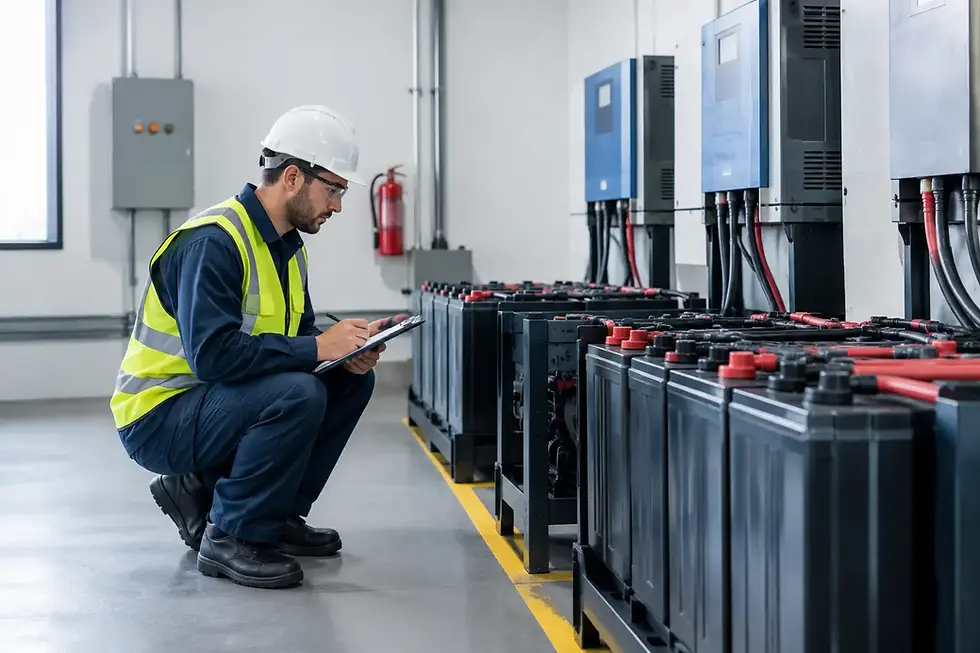
That does not mean electric forklifts are maintenance-free. Battery condition is central to their performance. Lead-acid batteries need correct charging, water level checks and cleaning. Poor charging habits can shorten battery life and reduce available run time. Connectors, cables, battery terminals and chargers also require routine inspection.
Diesel forklifts may have a lower entry cost in some capacity ranges and can be easier to deploy on temporary sites. Their running costs, however, include fuel, oil, filters and regular engine servicing. Issues with injectors, cooling systems, air filtration, starter motors and exhaust components can create costly downtime if maintenance is delayed.
A fair comparison includes the machine, energy or fuel, servicing, tyres, battery replacement, operator productivity and the cost of a breakdown during a busy shift. It should also include the cost of keeping a backup unit available if the operation cannot stop.
For short-term work, rental can reduce risk. Hiring the correct forklift for a project, seasonal peak or equipment breakdown avoids tying up capital in a machine that may not suit future requirements. It also gives operations teams a chance to confirm whether an electric unit has sufficient run time or whether diesel is genuinely necessary for the site conditions.
Capacity Is Not the Same as Real Lifting Ability
Whether electric or diesel, capacity must be checked against the actual load centre, lift height and attachment. A 2.5-tonne forklift does not necessarily retain a 2.5-tonne capacity when it is lifting high, carrying a long load or fitted with a fork positioner, clamp or other attachment.
This matters particularly in racking operations. An electric forklift may be ideal for the environment, but the required lift height, aisle width and pallet dimensions may point towards a specific counterbalance model or reach lorry. In an outdoor setting, a diesel forklift may have enough stated capacity but lack the right mast configuration for the loading work.
Share accurate details with the equipment provider: load weight, pallet size, lift height, working hours, ground surface, aisle width and whether the work is inside, outside or both. A site assessment is often faster and cheaper than correcting a poor machine choice after delivery.
Maintenance and Uptime Requirements
The most reliable forklift is one that receives scheduled attention before a small defect becomes a breakdown. Electric and diesel units both need planned servicing, safety checks and daily operator inspections. Brakes, steering, hydraulics, mast chains, tyres, forks and safety devices do not care which energy source powers the truck.
Electric forklifts need battery management and electrical diagnostics. Diesel forklifts need disciplined engine servicing and checks for leaks, overheating and fuel-system issues. In either case, operators should report slow lifting, unusual sounds, warning lights, poor braking, steering changes and fluid leaks immediately rather than continuing until the machine stops.
Parts availability and response time are equally important. A well-maintained forklift can still suffer an unexpected hose failure, electrical fault or tyre damage. Operations in Johor Bahru that depend on daily material movement benefit from a service partner that can diagnose the fault quickly, supply common parts and arrange a suitable rental replacement when necessary. TTS Machinery supports this approach with repair, maintenance, battery and rental solutions focused on keeping equipment available for work.
When Electric Is the Better Choice
Choose electric when the forklift mainly works indoors on level surfaces, air quality matters and the operation can support charging. It is particularly suitable for warehouses with predictable shifts, racking work, manufacturing lines and sites where low noise is valuable. Lithium-ion can be a strong option for high-use indoor fleets where break-time charging is practical.
Choose diesel when the machine spends most of its time outdoors, travels over rough ground, handles demanding loads for extended periods or needs rapid refuelling. It is often the more practical choice for construction, open yards and container-related work where conditions change throughout the day.
For mixed operations, do not compromise by choosing the wrong machine for the highest-risk task. Use electric equipment where it improves indoor safety and efficiency, and keep diesel capacity for the outside work that demands it. The best fleet decision is the one that gives operators the right equipment at the moment they need it, with a maintenance plan and backup arrangement that protects the next shift.


Comments