

How to Inspect Forklift Battery Before It Stops Work

A forklift that slows down halfway through a shift can hold up picking, loading and production long before it fully stops. Knowing how to inspect forklift battery condition gives your team an early warning of the issues that cause avoidable downtime: loose connections, low electrolyte, damaged cables, poor charging habits or a battery approaching the end of its service life.
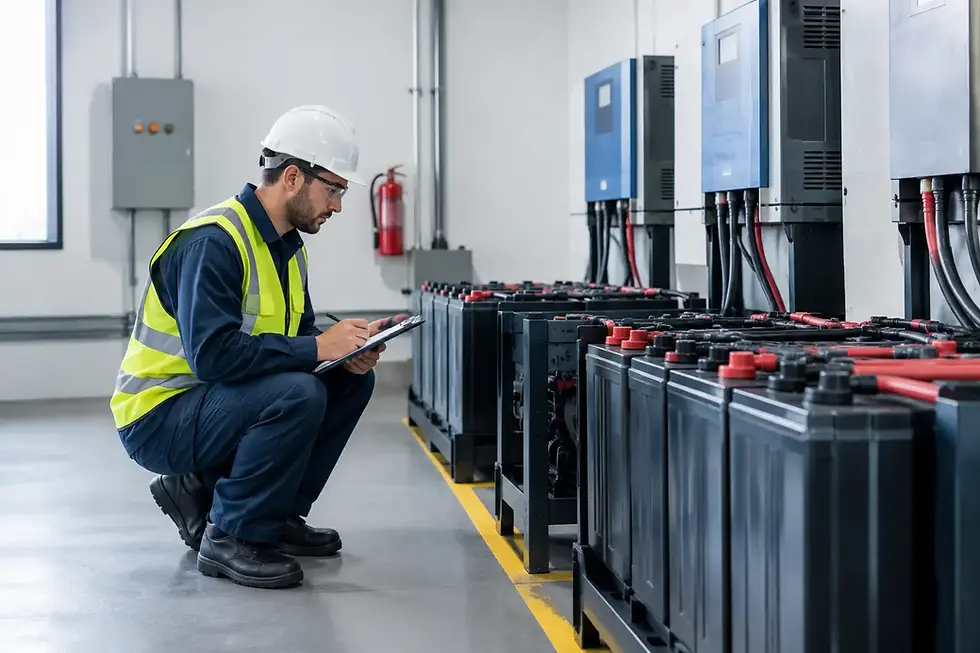
A proper inspection does not need to be complicated, but it must be consistent. The checks below are suitable for site teams and supervisors carrying out routine visual inspections. Any repair, electrical test, battery removal or work involving acid should be handled by a trained technician using the correct equipment.
Start with safe battery inspection practice
Before opening the battery compartment, park the forklift on level ground, lower the forks, apply the parking brake and switch off the machine. Isolate the battery connector where the forklift design allows it. Keep metal tools, watches, rings and other conductive items away from terminals, as accidental contact can create a dangerous short circuit.
Lead-acid forklift batteries contain sulphuric acid and can release hydrogen gas during charging. Wear suitable eye protection, gloves and protective clothing. Inspect and charge them only in a well-ventilated area, away from sparks, flames and smoking. Have an eyewash station and spill-control materials available in the battery area.
Lithium-ion batteries require different handling. They do not need electrolyte checks, but their casing, connectors, cooling arrangement and charging equipment still need routine attention. Always follow the battery and forklift manufacturer’s instructions, particularly where fault indicators or battery-management-system warnings are present.
How to inspect forklift battery condition step by step
Check the battery exterior and compartment
Begin with a close visual inspection before connecting the charger or starting the forklift. Look for cracks, bulging, leakage, corrosion, wet surfaces or unusual staining around the battery case. A swollen case, strong sulphur smell, excessive heat or visible acid leakage is not a minor defect. Take the lorry out of service and arrange a professional assessment.
Check that the battery sits securely in its tray and that any retaining mechanism is fitted correctly. A battery that can move during operation may damage the tray, cables, connectors and internal cell links. Inspect the compartment for acid residue, loose debris, damaged insulation and signs of heat around the connector area.
For lithium-ion units, check for physical damage to the enclosure, loose covers, blocked air paths and warning lights on the battery display. Do not open a sealed lithium battery housing. A damaged or overheated lithium battery needs specialist attention.
Inspect terminals, cables and connectors
Poor electrical connections are a common cause of voltage drop, heat build-up and inconsistent forklift performance. Examine the battery terminals and intercell connectors for corrosion, burns, looseness or damaged insulation. White, green or bluish deposits usually indicate corrosion and should be cleaned by a competent person using an approved method.
Follow the main positive and negative cables from the battery to the connector. Check for cuts, crushed sections, exposed copper, stiff insulation or cable lugs that have worked loose. Pay particular attention to areas where cables bend or rub against the battery tray.
The battery plug and forklift-side connector should fit firmly without excessive play. Look for blackened contacts, melted plastic, a burnt smell or discolouration. These are signs of resistance and heat. Continuing to operate with a damaged connector can lead to a sudden loss of power and may damage both the battery and the forklift electrical system.
Check electrolyte levels on lead-acid batteries
Only conventional lead-acid forklift batteries require water-level inspection. Remove vent caps carefully and check whether the electrolyte covers the plates. Exposed plates can sulphate quickly, reducing battery capacity and shortening service life.
The correct level depends on the battery design, so use the manufacturer’s indicator or guidance rather than overfilling by eye. In most cases, topping up is best done after the battery has completed a full charge, when the electrolyte level has stabilised. If plates are exposed before charging, add only enough demineralised or distilled water to cover them, then complete the top-up after charging.
Never add tap water, acid or unapproved additives. Tap water can introduce minerals that affect battery performance, while adding acid without proper testing can permanently damage the cells. Overfilled batteries may overflow during charging, causing corrosion and creating a slip and chemical hazard in the charging area.
If your operation has several electric forklifts, an automatic watering system can make this task more consistent. It still needs periodic inspection for leaks, blocked valves and damaged hoses.
Look for heat, odour and charging problems
After a normal charging cycle, carefully check whether the battery, cables or connector feel unusually hot. Some warmth is normal, but excessive heat suggests a poor connection, charger fault, failing cell or incorrect charging settings. Do not handle a hot battery unnecessarily. Allow it to cool and report the issue.
A strong rotten-egg smell from a lead-acid battery may indicate overcharging or excessive gassing. This can be caused by a faulty charger, incorrect charger programme, low electrolyte or internal battery problems. Check that the charger is matched to the battery voltage, capacity and chemistry. A charger that is suitable for one battery type is not automatically suitable for another.
Review the charging routine as well. Repeated opportunity charging of lead-acid batteries without allowing a full cycle can reduce available capacity over time. Lithium-ion batteries often support opportunity charging, but they still need the correct charger and operating procedure. The right approach depends on the battery technology, shift pattern and equipment manufacturer’s requirements.
Check performance during operation
Visual checks tell only part of the story. Ask operators whether the forklift is losing power earlier than expected, lifting more slowly, showing warning lights or needing more frequent charging. A battery that appears clean and undamaged may still have weak cells or reduced capacity.
Compare the actual operating time with the usual shift requirement. If a forklift that once completed a full shift now requires charging after a few hours, record the change rather than treating it as normal ageing. A technician can perform voltage, specific gravity and load tests on lead-acid batteries to identify individual weak cells. Lithium-ion diagnostics are generally read through the battery management system and approved service tools.
Watch for changes in forklift behaviour such as intermittent power loss over rough ground, a display that resets, slow hydraulic response or a connector that feels hot after use. These symptoms can point to battery faults, but they can also be caused by wiring, controller or motor issues. Proper diagnosis prevents unnecessary battery replacement.
Set an inspection schedule that fits the operation
The right frequency depends on how hard the forklift works. A single-shift truck in a light warehouse may only need a detailed weekly check alongside daily operator walk-around inspections. Multi-shift, high-load or dusty operations need closer attention, particularly where batteries are charged every day.
A practical routine is to check the exterior, connector and visible cables before each shift; inspect electrolyte levels and compartment cleanliness weekly for lead-acid batteries; and arrange planned battery condition testing at regular service intervals. Keep a simple record of watering, charging concerns, fault codes, damaged connectors and reduced run time. Trends are more useful than a single inspection result.
For fleet managers, battery records also make replacement decisions more controlled. A battery may be repairable if the problem is a connector, cable or isolated cell issue. If capacity has declined across the battery, case damage is severe or repairs become frequent, replacement may be the more cost-effective option. The decision should be based on uptime, repair history and the forklift’s duty cycle, not only the purchase price.
When to remove a forklift from service
Take the forklift out of service immediately if you find acid leakage, a cracked or swollen battery case, smoking, excessive heat, melted connectors, exposed live conductors or a persistent electrical burning smell. Do the same if the battery produces unusual noises, severe gassing or repeated fault warnings during charging.
Do not try to force a damaged connector together, bypass a fuse or continue using a battery because the forklift can still move. Small electrical faults can develop into damaged controllers, charger failures or safety incidents. Fast reporting gives a service technician the best chance of resolving the issue before it affects the rest of the shift.
A clean battery, secure connections and a disciplined charging routine will usually return more value than waiting for a complete failure. When your team records early warning signs and acts on them promptly, forklift battery inspection becomes a practical way to protect uptime rather than another task added to the maintenance list.


Comments