
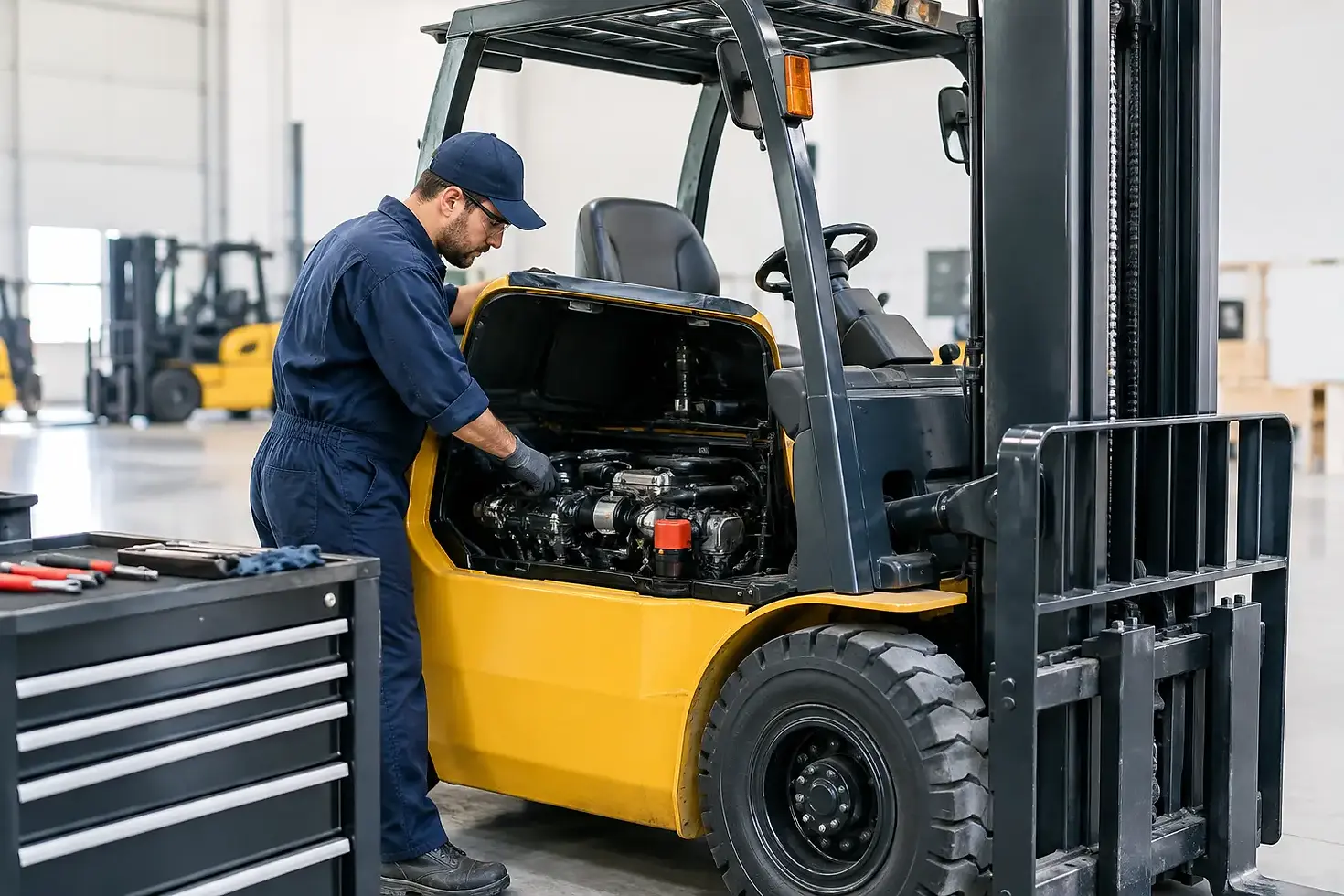
How to Plan Forklift Servicing Without Downtime

A forklift that stops during a loading rush does not only create a repair bill. It can delay deliveries, leave goods stranded in the racking area and force staff to work around an avoidable bottleneck. Knowing how to plan forklift servicing properly gives warehouse and factory managers more control over uptime, cost and safety.
The right plan is not simply a date in the diary. It should reflect how hard each machine works, the environment it operates in, the condition of its battery or engine, and the consequences if it is unavailable. A lightly used forklift in a clean warehouse needs a different approach from a reach lorry running extended shifts in a busy distribution operation.
Start with the real working pattern of each forklift
Begin by creating a clear equipment register. Record the make, model, serial number, capacity, fuel or battery type, age, current hour-meter reading and the area where each forklift operates. Include attachments, such as side-shifters or clamps, because these also need inspection and maintenance.
The hour meter matters more than the calendar alone. A machine used for one hour a day will accumulate wear very differently from one working two shifts. Manufacturers normally specify maintenance intervals by operating hours, but calendar-based servicing still has a place for equipment with low utilisation. Oils, filters, seals, hoses and batteries can deteriorate even when the forklift is not heavily used.
For each unit, identify its operating conditions. Dusty production areas, uneven yards, cold stores, wet loading bays and confined warehouses all place different demands on tyres, brakes, hydraulics and electrical systems. If a forklift regularly handles loads close to its maximum capacity, factor this into the maintenance schedule rather than relying on a generic service interval.
Build a forklift servicing schedule around operating hours
A practical servicing plan uses three levels of attention: daily checks by the operator, planned preventive servicing by a technician, and prompt corrective repairs when faults are identified.
Daily checks should happen before the forklift is put into service. These checks are not a substitute for servicing, but they are often the earliest warning that a problem is developing. Operators should report issues such as hydraulic leaks, damaged forks, poor braking, unusual noises, steering play, warning lights, tyre damage or reduced battery performance immediately.
Planned servicing should be scheduled against the manufacturer’s recommended operating-hour intervals, then adjusted where site conditions justify it. Rather than waiting until a machine reaches the exact hour figure, arrange the service slightly in advance where possible. This allows time to secure parts and book a technician without taking the forklift out of operation unexpectedly.
For a fleet with several machines, avoid booking every service in the same week. Spread appointments across the month or quarter so one delay does not reduce your handling capacity all at once. In a busy warehouse, plan work during quieter shifts, stocktakes, planned shutdowns or periods when rental cover can be arranged.
Use a service calendar that your team will actually maintain
A complicated spreadsheet is not useful if nobody updates it. Your calendar should show the last service date, current hour-meter reading, next service due date, target operating hours and any open repair items. Assign one person to review it weekly, usually the warehouse manager, maintenance coordinator or operations supervisor.
Set reminders based on both date and hours. This is particularly useful where utilisation changes by season. A forklift may operate lightly for several months, then work long hours during a peak order period. Monitoring both triggers prevents service dates being missed when activity rises quickly.
Match the service scope to the machine and its risks
Not every service visit needs the same scope, but every visit should be defined clearly. A proper planned service generally examines safety-critical components and routine wear items, including brakes, steering, mast chains, hydraulic hoses, lift cylinders, forks, tyres, lights, alarms, fluid levels and filters. The technician should also assess the condition of the battery, charging equipment or fuel system.
Ask your service provider what is included before approving the work. A low headline price may cover an inspection only, while oils, filters, labour for repairs and replacement parts are charged separately. There is nothing wrong with separate charges when they are transparent. The key is receiving an honest and fair quote before non-routine repairs begin.
Age is another factor. A newer forklift may need standard preventive servicing and warranty-compliant parts. An older machine may benefit from a more detailed inspection, especially if it has a history of hydraulic leaks, electrical faults or repeated tyre wear. In some cases, repairing an older forklift remains the most cost-effective choice. In others, recurring downtime may justify a reconditioned replacement or rental arrangement while a longer-term decision is made.
Plan battery maintenance as part of the service programme
For electric forklifts and reach lorries, battery condition directly affects productivity. A weak battery can shorten operating time, slow lifting performance and leave a machine unavailable when the shift is busiest. Battery care should not be treated as a separate issue after performance has already declined.
Include battery inspections in the service plan. This may involve checking terminals, connectors, cables, water levels where applicable, charger operation and signs of heat damage or corrosion. Charging practices should also be reviewed. Repeated opportunity charging, deep discharging or using an unsuitable charger can reduce battery life and create unnecessary replacement costs.
If your operation relies on multiple electric lorries, keep a record of battery age, capacity and charging cycles where available. Consider whether spare batteries, a battery change-out process or upgraded charging arrangements are needed to support peak periods. The best solution depends on shift length, available charging time and the physical layout of the site.
Make breakdown response part of the plan, not a last-minute scramble
Preventive servicing reduces failures, but it cannot eliminate them. A realistic plan includes what happens when a forklift stops unexpectedly. Keep the service provider’s emergency contact details available to supervisors, and make sure operators know how to isolate an unsafe machine and report the fault clearly.
When calling for repair support, useful information includes the forklift model, serial number, fault code, symptoms, location, battery or fuel type and whether the machine is blocking a loading bay or aisle. Clear information helps the technician arrive with the right tools and likely parts.
For critical operations, discuss response expectations before an emergency occurs. Businesses in Johor Bahru with time-sensitive warehouse or manufacturing activity may need a provider that can offer fast onsite attendance, stocked service vans and temporary rental forklifts where appropriate. Rental cover is particularly valuable when a major repair requires parts that cannot be fitted on the same day.
Keep records that help you make better decisions
Service reports should not disappear into a filing cabinet. Review them for repeat faults, rising repair costs and patterns such as frequent punctures, damaged forks or battery issues. These patterns often point to an operational cause: poor housekeeping, unsuitable tyres, overloaded use, damaged charging equipment or operator practices that need attention.
Track total maintenance cost by forklift, including planned servicing, call-outs, parts, tyres, batteries and rental cover. This gives procurement and operations teams a more accurate basis for deciding whether to repair, refurbish, replace or add another unit to the fleet.
A useful service history also supports safer handovers between shifts and makes it easier to manage external technicians. TTS Machinery can support this process with scheduled servicing, onsite repair, battery support, parts supply and practical recommendations based on the condition of each machine.
Review the plan after operational changes
Forklift servicing plans should change when the operation changes. Review the schedule after extending shift hours, moving to a new warehouse, adding heavier loads, changing aisle layouts or introducing new equipment. A plan built for a single daytime shift may no longer protect uptime once the fleet begins operating six days a week.
The aim is not to service equipment more often than necessary. It is to carry out the right work before wear becomes a breakdown, while keeping disruption and costs under control. A well-maintained forklift fleet gives your team something far more valuable than a completed checklist: the confidence that essential handling work can continue when the pressure is on.


Comments