
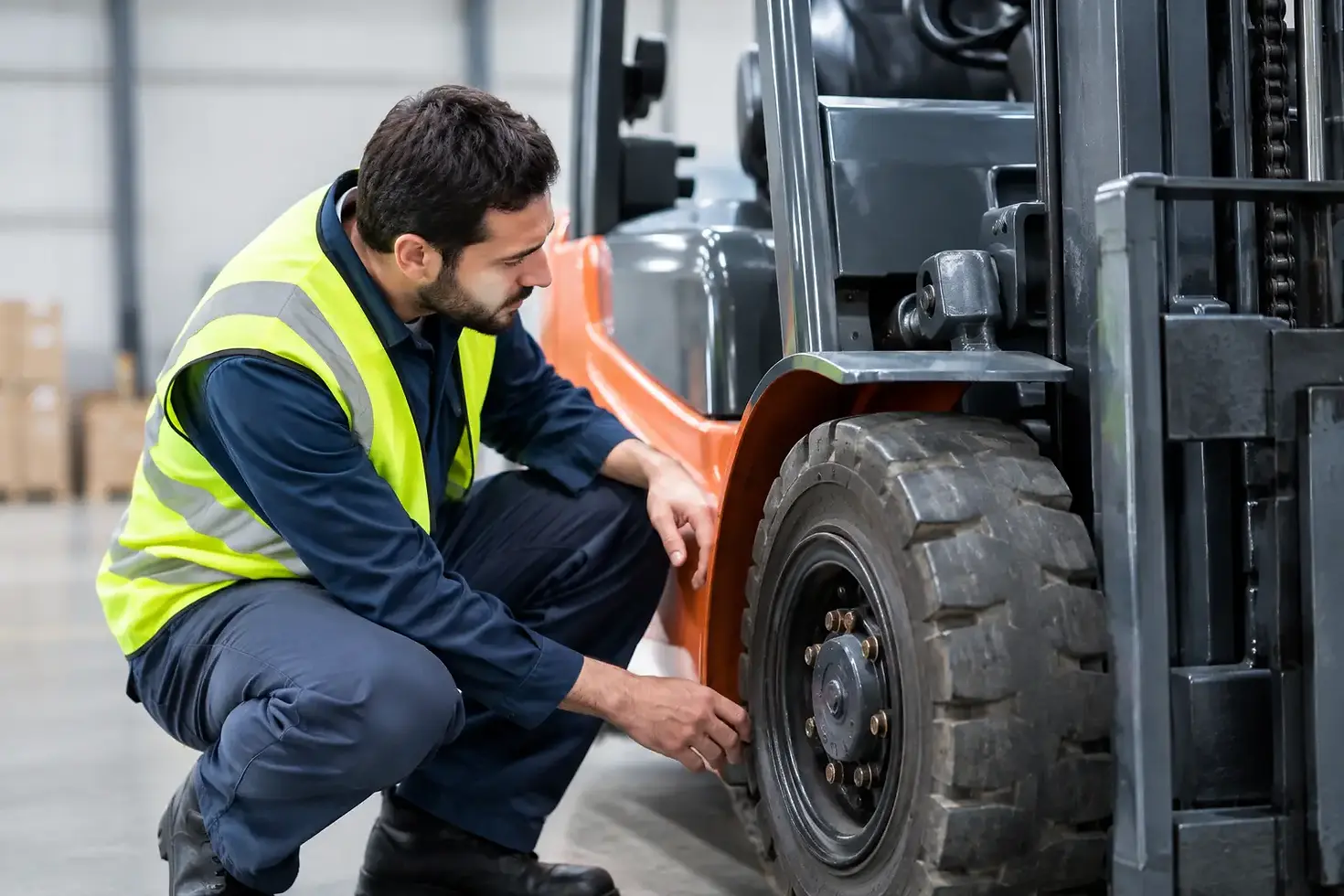
Forklift Brake Problems and What They Mean

A forklift that takes an extra metre to stop is not a minor inconvenience. In a busy warehouse aisle, loading bay or production area, it can quickly become a collision risk, damage stock, and put operators and pedestrians in danger. Forklift brake problems also create the kind of unplanned downtime that disrupts schedules and forces supervisors to rearrange labour at short notice.
Brakes should respond consistently, hold the lorry securely, and give the operator confidence on every shift. When they do not, taking the equipment out of service is usually the right operational decision. Continuing to use a forklift with unreliable braking can turn a manageable repair into a costly incident.
The warning signs operators should report immediately
Operators are often the first people to notice that braking performance has changed. A daily pre-use inspection is not simply a compliance exercise. It is the quickest way to identify a developing fault before the forklift is working under load or travelling on a ramp.
The clearest warning sign is increased stopping distance. If the brake pedal must be pressed harder than usual, feels soft or spongy, or travels close to the floor before the forklift slows, the lorry needs attention. A pedal that feels unusually stiff can also indicate a fault, particularly on equipment with a hydraulic or assisted braking system.
Listen as well as feel. Grinding, squealing or scraping during braking may point to worn brake shoes, contaminated components, damaged drums or other mechanical wear. Pulling to one side when braking is another serious symptom. It can make the forklift difficult to control, especially when carrying a pallet or travelling on uneven ground.
Other signs include a parking brake that will not hold on an incline, visible fluid beneath the machine, a burning smell after normal use, or a brake warning light on the dashboard. Any one of these signs justifies removing the forklift from operation until a competent technician has inspected it.
Common forklift brake problems and their causes
Forklift braking systems vary by make, model and fuel type, but most faults fall into a few practical categories. The right repair depends on identifying the actual cause rather than replacing parts based on symptoms alone.
Worn brake shoes, pads or drums
Friction materials wear through ordinary use. The rate depends on the operating environment, load weights, travel distances, gradients and operator habits. A forklift that repeatedly stops from speed with heavy loads will place more demand on its brakes than one used for short, light movements.
Worn shoes or pads can reduce stopping performance and produce noise. If wear is left too long, it may damage drums, discs or associated hardware, increasing the repair cost. Planned inspections allow wear parts to be changed at a suitable point rather than waiting for a breakdown.
Hydraulic fluid loss or air in the system
Many forklifts use hydraulic brake systems. Low fluid level, a leaking hose, a worn seal or a damaged wheel cylinder can reduce hydraulic pressure. The result is commonly a soft pedal, poor braking response or a pedal that requires pumping before it feels firm.
Air can enter the system after a leak or an incorrect repair procedure. Bleeding the brakes may restore pedal feel, but it does not address why air entered the system. A technician should locate and rectify the underlying issue before the forklift returns to service.
Parking brake faults
The parking brake is designed to keep a stationary forklift secure, not to compensate for weak service brakes. Stretched cables, seized linkages, worn friction components or incorrect adjustment can prevent it from holding properly.
This fault is particularly important where forklifts operate on ramps, at loading bays or near vehicle access points. Operators should never park a forklift with a doubtful parking brake on an incline, even briefly.
Contamination and water ingress
Oil, grease, water and debris can contaminate braking components. This is more likely where forklifts work outdoors, near wash-down areas, in construction environments or around leaking hydraulic equipment. Contamination reduces friction and can cause inconsistent braking or pulling to one side.
Cleaning alone is not always enough. The source of the contamination must be fixed, and affected friction parts may need replacement. Otherwise, the same problem will return soon after the forklift is put back to work.
Tyres, steering and load-related issues
Not every apparent braking fault begins at the brakes. Severely worn tyres reduce grip and can lengthen stopping distance, particularly on wet concrete or dusty floors. Steering faults, uneven tyre wear and poor wheel alignment can also make a forklift feel unstable when slowing down.
Load handling matters too. An overloaded forklift, an unstable pallet or a load carried too high changes the machine's stopping behaviour. Even a correctly maintained brake system cannot remove the risk created by exceeding the rated capacity or travelling too quickly for site conditions.
What to do when a brake fault is found
If an operator identifies poor braking, stop using the forklift in a safe area and report the issue to the person responsible for equipment safety. Mark the machine clearly as out of service so that another shift does not unknowingly use it. Do not rely on a verbal handover alone.
Avoid makeshift adjustments or repairs by untrained staff. Brake systems are safety-critical, and an incorrect adjustment can mask a fault without restoring safe performance. A proper inspection should check brake wear, hydraulic lines, fluid condition, cylinders, linkages, parking brake operation, tyres and the overall response of the machine.
For businesses that cannot afford to lose handling capacity, the practical solution may be a repair visit combined with a short-term rental forklift. This keeps loading, picking or production work moving while the affected unit is assessed. It is often more cost-effective than allowing a single breakdown to hold up an entire shift.
Preventing brake-related downtime
The most effective brake maintenance begins before a fault appears. Daily checks by operators and scheduled servicing by trained technicians serve different purposes, and both are needed. Operators can identify changes in pedal feel, brake response, fluid leaks and parking brake performance. Technicians can measure component wear, inspect hidden parts and correct faults before they affect safe operation.
Service intervals should reflect how the forklift is actually used. A lorry operating one light shift indoors will have different maintenance needs from a reach truck working extended hours in a high-volume warehouse. Dusty sites, uneven surfaces, ramps, frequent trailer loading and heavy loads all justify closer attention.
Good operating practice also extends brake life. Operators should travel at a controlled speed, leave adequate stopping distance, avoid harsh braking where possible, and keep loads within the forklift's rated capacity. Reporting small changes promptly is far better than waiting until the brakes fail a daily inspection or the forklift becomes unsafe during a shift.
Keep clear maintenance records
Accurate service records help managers spot repeat faults and plan expenditure. If the same forklift repeatedly needs brake adjustment, has recurring fluid loss or experiences rapid component wear, there may be a wider issue involving usage conditions, parts quality or operating practice.
Records also make it easier to schedule servicing around production needs. Rather than reacting to a breakdown during a peak period, maintenance can be arranged when disruption is lower and replacement equipment is available if required.
When professional repair is the right call
A brake warning light, fluid leak, loss of braking force, grinding noise or parking brake failure should always be assessed professionally. The same applies after an impact, a severe overload event or any incident where the forklift has behaved unpredictably while stopping.
For operations in Johor Bahru, a responsive service partner can make the difference between a contained repair and a full day of lost handling capacity. TTS Machinery can inspect forklift brake faults onsite, provide clear repair recommendations, and support planned servicing or rental cover where required.
Treat a change in braking performance as useful early warning, not a problem to work around. Taking the forklift out of service early protects people, stock and schedules, while giving the repair team the best chance to resolve the fault before it becomes more expensive.


Comments